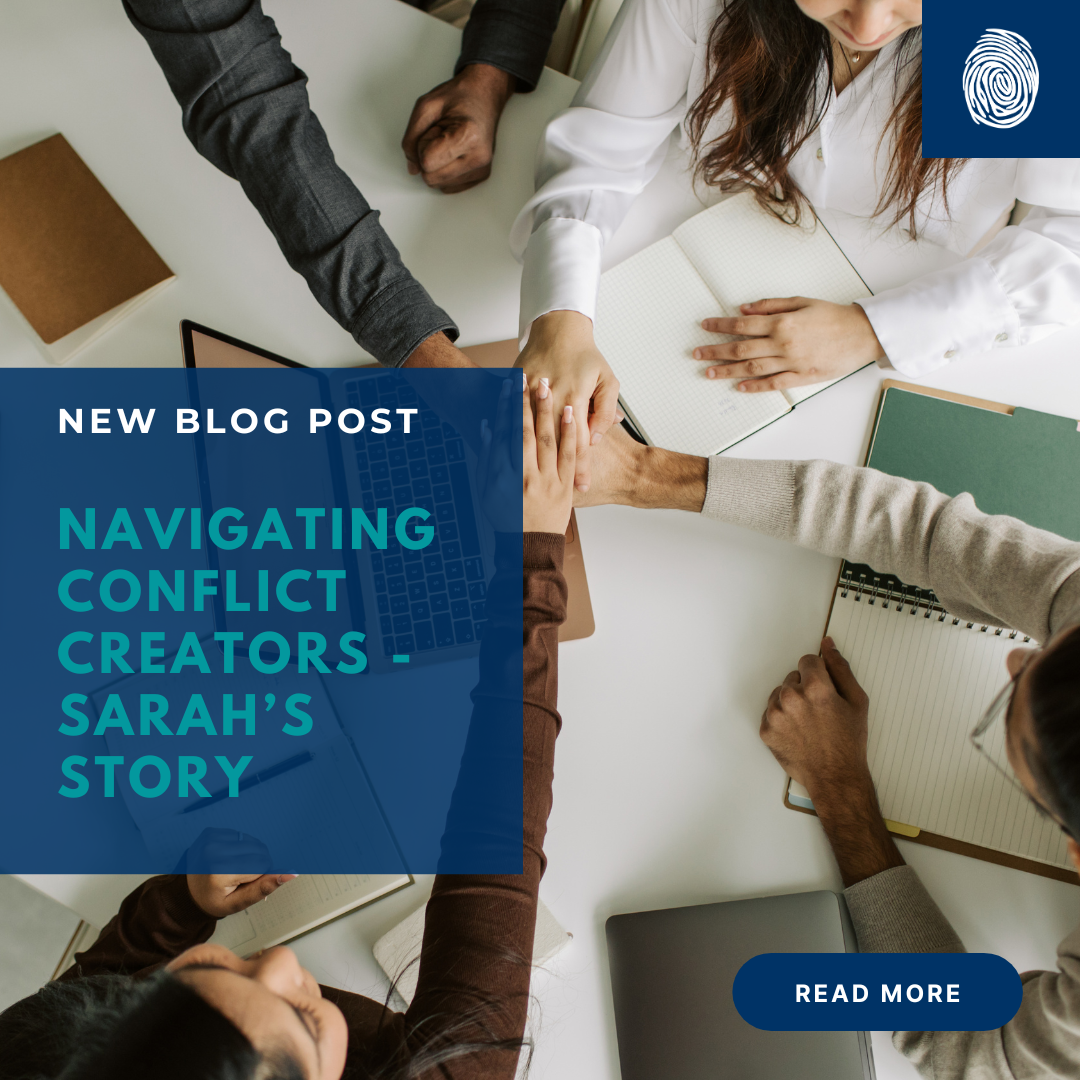
Sarah was a new leader, stepping into a team with deep cultural tensions. She noticed people withdrawing, whispering in corridors, avoiding meetings. And yet—she said nothing.
Why?
“I grew up in a divorced family. Conflict meant yelling, silence, or someone leaving. I’ve spent my life trying to keep things calm.”
Sarah has Harmony as one of her dominant CliftonStrengths. She saw this talent as a weakness—something that made her avoid conflict. But we explored what Harmony really is:
– The ability to sense tension before it’s spoken.
– To find common ground.
– To create shared understanding.
She started small—saying things like, “What I’m noticing right now is a shift in energy. Can we pause and talk about it?”
And it changed everything. By naming what others were tiptoeing around, she built trust and defused potential blowups before they had a chance to grow legs.
In my work, I’m all about helping teams discover and use their strengths to navigate the real tension points—the conflict creators—not just smooth them over.
Question to consider:
Are there talents and strengths you’re underplaying, because of old stories about what conflict “should” look like?