One of the most common reactions I hear in CliftonStrengths workshops is:
“I’m surprised I don’t have [insert theme here] in my Top 10”
People see a behaviour or result in themselves and assume it comes from a particular talent. But when that talent doesn’t show up high in their report, they’re left wondering, where is that coming from, then? Or is this report accurate?
That’s where we enter the world of masquerading talents when a collection of themes combine to create the effect or impact of another theme.
Not imitation. Not wishful thinking.
But a real, functional dynamic, a result that shows up like a theme, even if it’s not the one doing the heavy lifting.
The Jelly Bean Analogy
If you’ve been in a session with me, you’ve probably heard this before. I often compare strengths combinations with the jellybean analogy.
Let’s say you don’t have a Tropical flavoured jellybean in your packet. But if you mix peach, pineapple and coconut, you still end up with something that tastes tropical. Different ingredients, same vibe.
That’s what can happen with strengths. You might not have Empathy as a CliftonStrength theme, but a combination of Includer, Harmony and Individualisation might create the same relational flavour.
You’re still tuned into people’s emotions. You just get there through your own mix and it might look a little different. Even for two people with the talent theme of Empathy is looks different based on the other talents around it.
The Masquerade: A New Layer
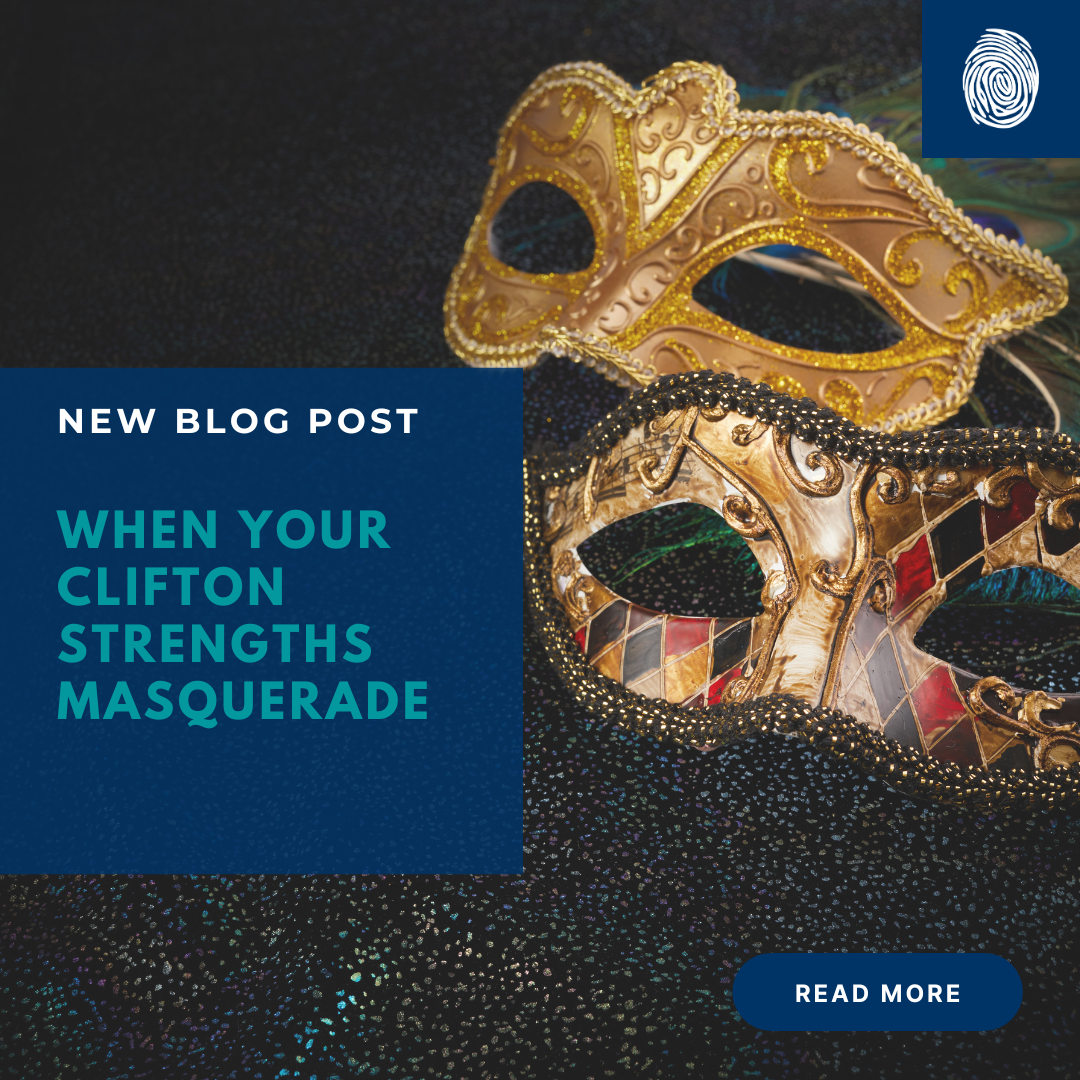
This week, I was listening to the Strengths Whisperer podcast where another coach described talents as sometimes masquerading as others. I liked this new take, something different to the Jelly Bean. A new image in my head.
Some strengths put on a mask, show up to the party, and people say,
“Oh, that must be Strategic.”
But when you look closer?
It’s actually Analytical, Connectedness and Restorative working together.
This metaphor adds something new to the jellybean conversation.
It’s not just the flavour of a theme — it’s the costume it wears (I always wanted to go to a masked ball and wear a fancy mask).
You’re not pretending.
You’re simply achieving similar outcomes using different talents.
Understanding Masquerading Themes
Strengths don’t operate in isolation.
They show up in combinations, patterns, and dynamics often blending and reinforcing each other in subtle and powerful ways.
That’s the heart of the masquerade metaphor.
One set of talents can look like, feel like, and produce results like another.
Here’s what that might look like in real life:
- A person without Strategic might still be an exceptional decision-maker. Their ability could be rooted in Analytical (processing data), Connectedness (seeing patterns), and Restorative (anticipating problems).
- No Communication theme? You might still light up a room — but it’s your Woo, Positivity, or Includer doing the work, just in a different tone.
Why It Matters: For Self-awareness, Teams, and Coaching
- Self-awareness deepens
When people fixate on a theme they don’t have, they might miss the insight into howthey achieve similar results with the themes they do have.
- Theme maturity grows
It shifts the focus from wanting to be someone else, to owning how your strengths already show up with nuance and power.
- Team conversations get richer
Instead of boxing people in with “you’re the Relator” or “you’re the Activator,” teams begin to see the dynamic dance of strengths, and appreciate the diversity of how outcomes are achieved.
- Coaching becomes more layered
This opens up coaching conversations around theme dynamics.
Ask:
“What other talents might be contributing to that outcome?”
It’s no longer about what’s missing. It becomes about discovering what’s already working behind the scenes.
Remember, there’s no exact formula; everyone’s mix is unique, CliftonStrengths is not WHAT you do but more HOW you do it.
Try This Reflection:
If a theme feels absent, pause and ask:
- What outcome or behaviour am I noticing in myself?
- Which of my themes might be contributing to that?
- How might they be combining to achieve a similar result?
- What “mask” might my talents be wearing?
It’s Not What’s Missing
You don’t need to “have” a certain talent to create a particular impact.
What matters is how your strengths combine and what they produce in practice.
Sometimes they wear a mask.
Sometimes they taste like something else.
And sometimes, your brilliance just shows up in a way no one else could’ve predicted.
That’s the power of understanding theme dynamics.
Not just knowing your Top 10 (and beyond) but knowing how they work together.
If you’ve spotted this in yourself or your team, I’d love to hear what you’ve discovered.
Side note: Sometimes we’re also just not as self-aware as we think, we believe we have Empathy, but what we’re actually doing is being kind, considerate, or just a good listener. We hear the word “Empathy” and assume it means “being caring,” when in CliftonStrengths, it’s something much more specific: the ability to feel what others are feeling. Same word different meaning.
Do you have talents that masquerade as something else, I would love to hear your combination?